Technical buyer guide
Worm Shaft Wear and Contact-Pattern Troubleshooting
Wear on a worm shaft is evidence, not automatically the root cause. Contact pattern, lubrication, center distance, bearing condition, alignment, material pairing and duty all influence what appears on the flanks.
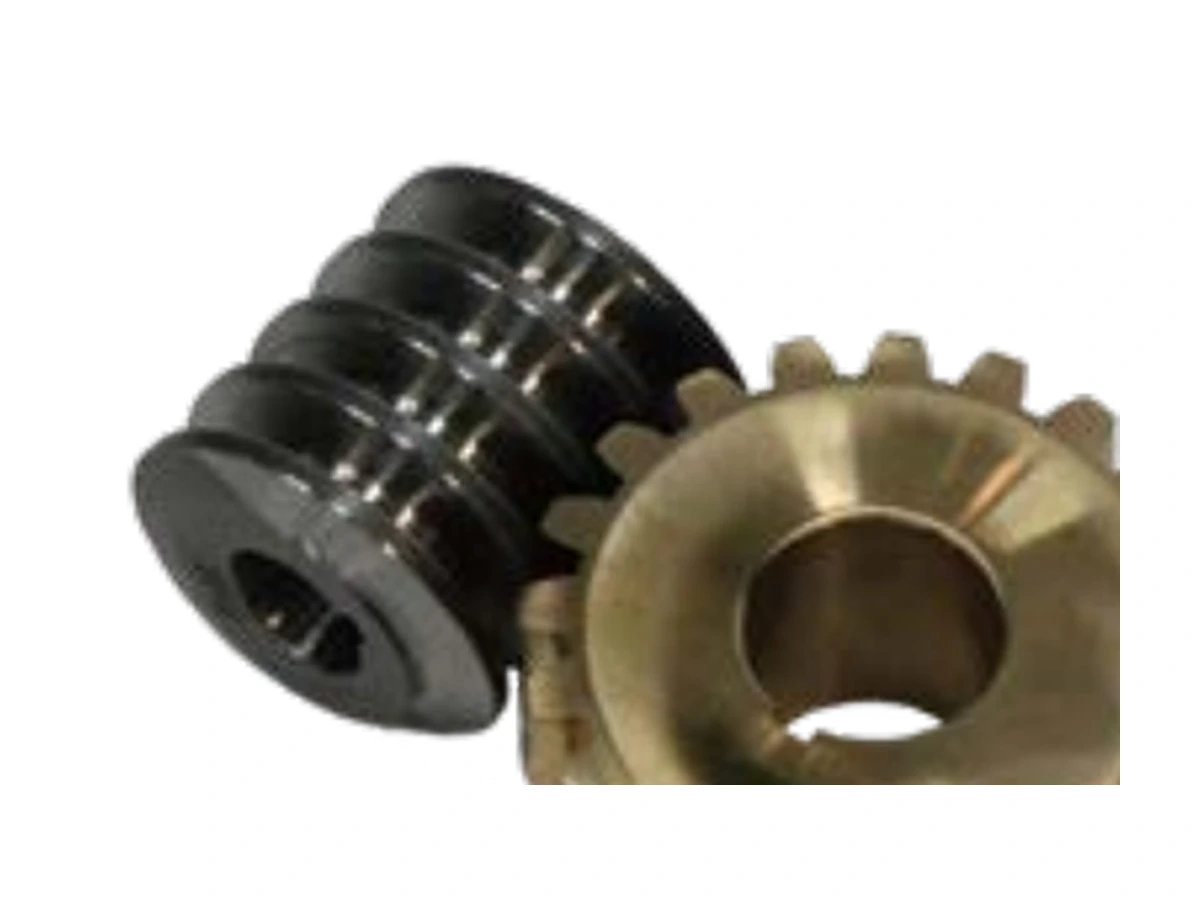
Why this question matters
For a buyer, worm shaft wear and contact pattern matters because it changes the information that belongs on the drawing, inspection plan or RFQ. The checks below turn the topic into purchasing decisions instead of leaving it as background theory.
Decision point
Read the wear location
Edge loading can point toward alignment, center-distance or deflection problems. Scoring may point toward lubrication, contamination or surface interaction. Pitting or progressive profile change needs the load/material/treatment context.
Decision point
Inspect the wheel too
A new shaft running against a badly worn or incompatible wheel can repeat the same problem. Photograph and inspect both members before deciding to replace only one.
Record the operating condition
Input speed, load, reversals, temperature and lubricant condition help distinguish a geometry problem from a service-condition problem.
RFQ fields to carry forward
| パラメータ | 仕様/ガイダンス |
|---|---|
| Part reference | Drawing/sample/model and revision. |
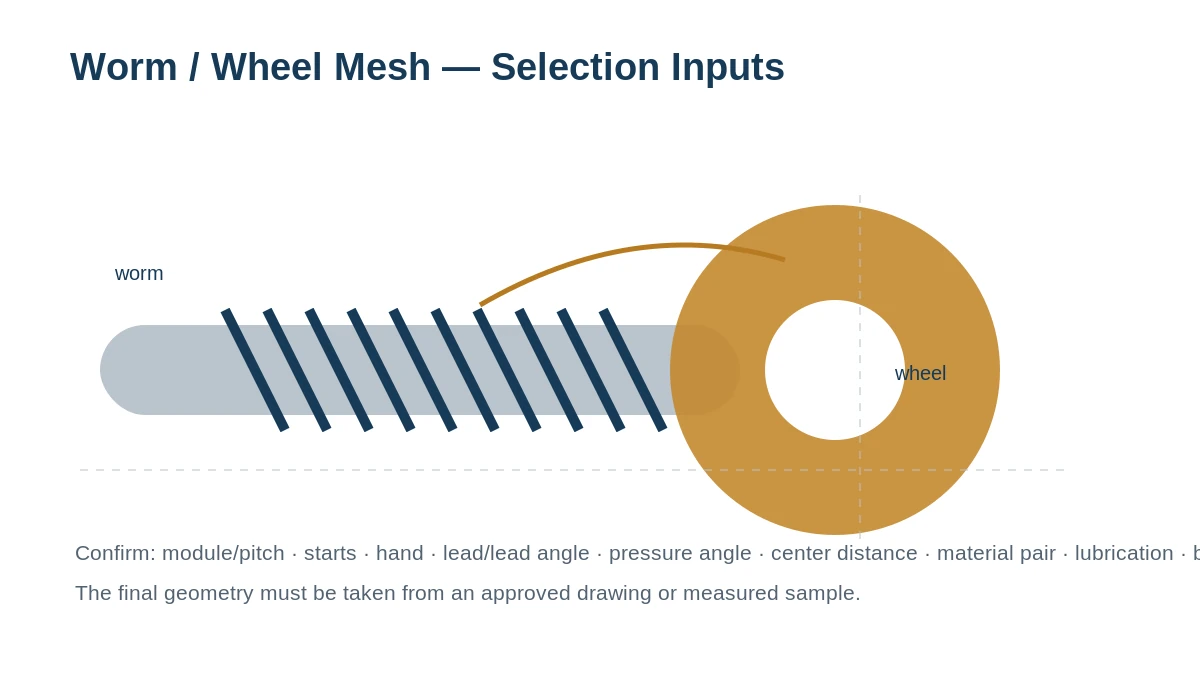
| Worm geometry | Module/pitch, starts, hand, lead/lead angle, pressure angle when known. |
| Mating wheel | Tooth count/material/center distance or complete assembly reference. |
| Interfaces | Journals, shoulders and end features. |
| Duty | Speed, load, duty, lubrication, environment. |
| Order | Quantity, inspection/documents, target date and destination. |
よくある質問
Can I leave unknown values blank?
Yes. Mark them as unknown and attach the part/wheel or application context. A blank item is safer than a guessed technical value.
Does the website product table replace my drawing?
No. Product tables organize confirmed series context and RFQ requirements. The approved drawing or order specification controls custom geometry.
Can I order samples first?
For a worm shaft wear and contact pattern project, 1–5 samples can be considered where the manufacturing route is suitable. A very small 1–2 piece order is also possible, normally at a higher unit cost.
Practical check
Photograph the evidence before cleaning or scrapping the parts
Wear location can disappear when components are cleaned, polished or mixed with other spares. Take overall and close-up photos of the shaft, wheel, bearings and lubricant condition, then mark rotation direction and load side before the assembly is disturbed further.
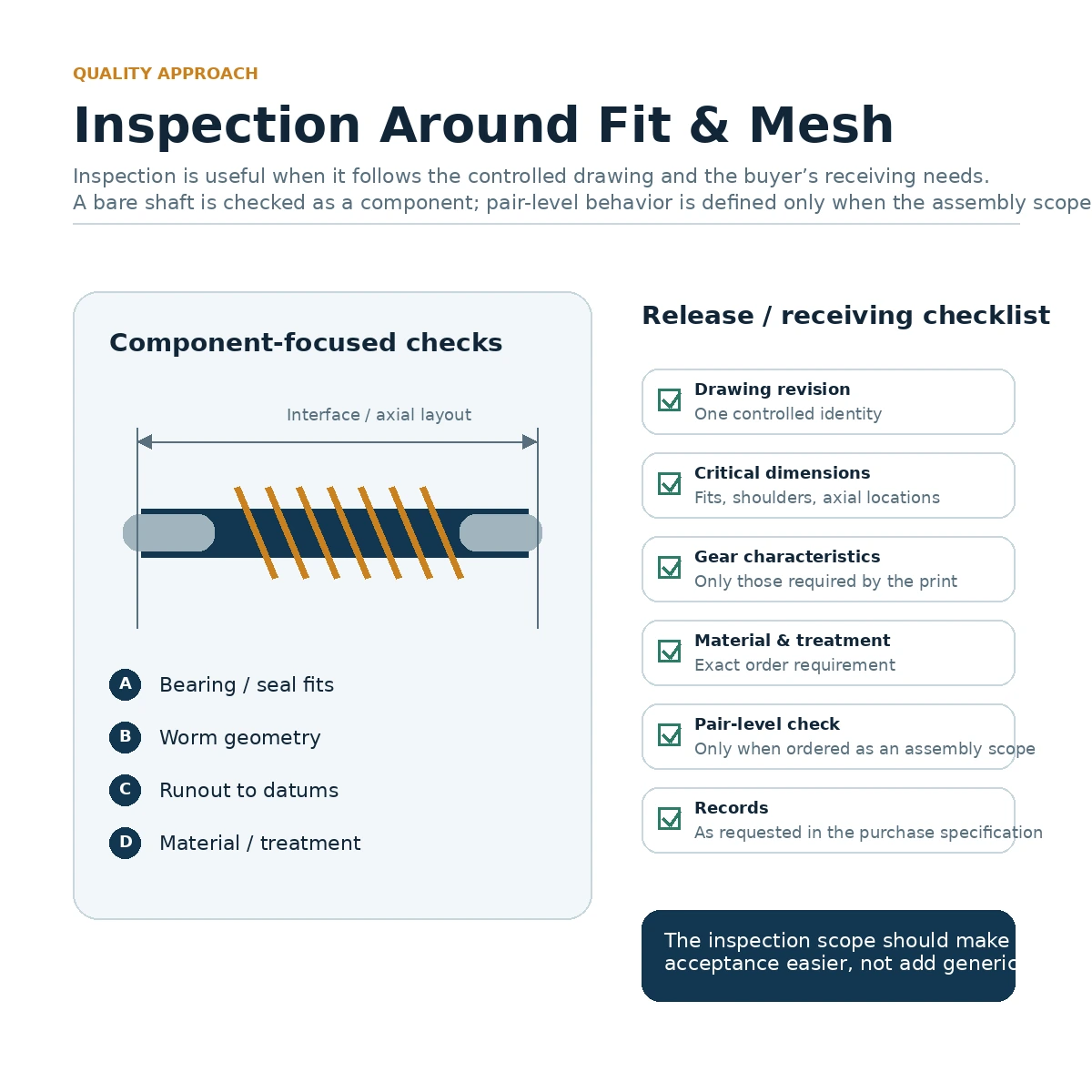
Use the symptom table while the failed assembly is still available. Photographs and observations taken before cleaning or mixing parts often provide the context needed to distinguish tooth wear from alignment, bearing or lubrication problems.
Working check
| Situation | What to verify |
|---|---|
| Scoring / heat marks | Record lubricant condition, speed/load event and bearing freedom. |
| Localized edge contact | Check alignment, center distance, bearing support and axial position. |
| Pitting on both members | Document duty and material/treatment; replacing one member alone may not address the pair condition. |
| Keyway/journal damage | Separate interface damage from tooth geometry so the replacement drawing fixes the correct problem. |
実際のインターフェースからの引用
見積もり依頼/見積依頼を送信
モデルまたは図面の参照情報、数量、用途、および嵌合とメッシュを制御する形状をお送りください。不明な値は推測ではなく、確認のために特定することができます。