Guía técnica para el comprador
Ground vs Hobbed Worm Shafts: Process and Selection
Grinding and hobbing are manufacturing-route decisions. The drawing, material/treatment sequence, finished geometry and production economics decide which route belongs on the part.
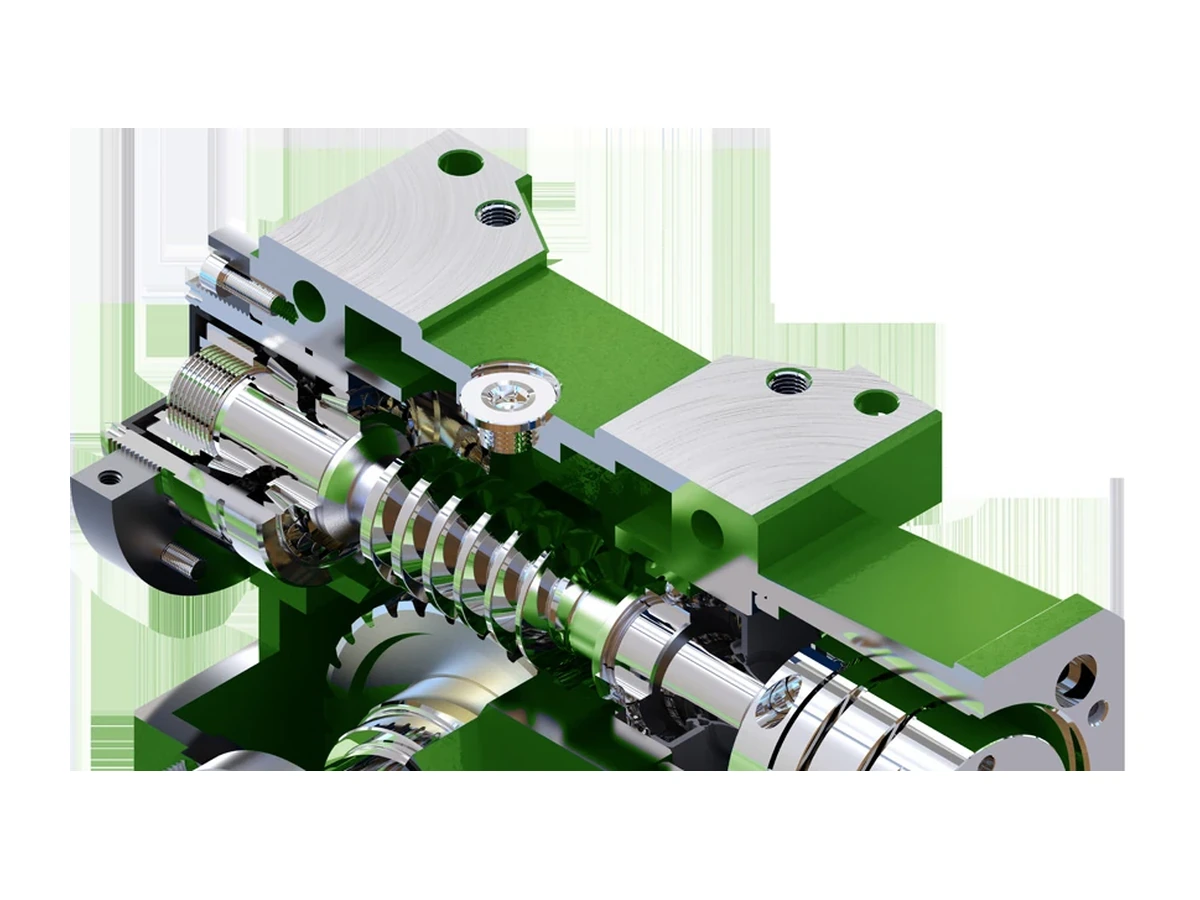
Por qué esta pregunta es importante
For a buyer, ground and hobbed worm shafts matters because it changes the information that belongs on the drawing, inspection plan or RFQ. The checks below turn the topic into purchasing decisions instead of leaving it as background theory.
Punto de decisión
Hobbing / generating route
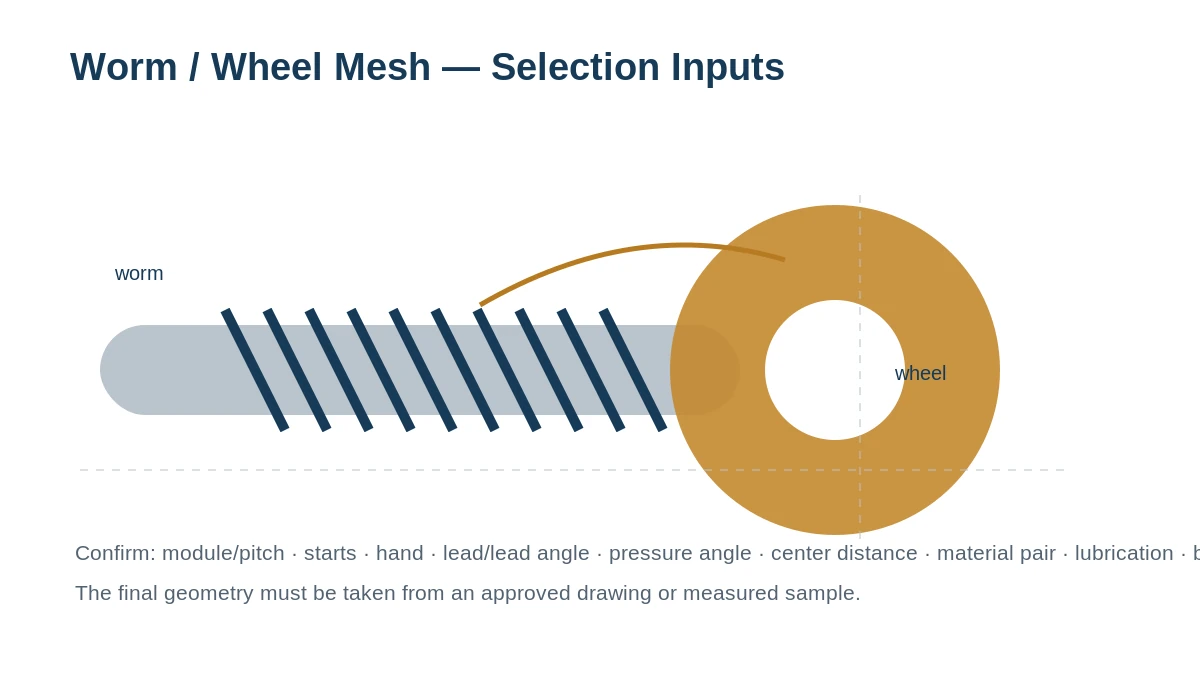
A generated tooth surface can be appropriate for many worm shafts when the specified geometry and finished requirement are compatible with the process.
Punto de decisión
Grinding route
Thread grinding is considered when the ordered tooth geometry, post-treatment condition or finish requirement calls for a ground final surface. It is not automatically required for every precision-sounding application.
RFQ note
If the drawing controls the process, say so. If it controls only the functional result, provide the required geometry/quality so the route can be reviewed instead of chosen from a website label.
Los campos de la solicitud de cotización se transferirán.
| Parámetro | Especificación / guía |
|---|---|
| Referencia de la pieza | Dibujo/muestra/modelo y revisión. |
| Geometría de gusano | Módulo/paso, inicios, mano, avance/ángulo de avance, ángulo de presión cuando se conocen. |
| Rueda de acoplamiento | Número de dientes/material/distancia entre centros o referencia del conjunto completo. |
| Interfaces | Revistas, hombros y características finales. |
| Deber | Velocidad, carga, servicio, lubricación, entorno. |
| Orden | Cantidad, inspección/documentación, fecha límite y destino. |
Preguntas frecuentes
¿Puedo dejar los valores desconocidos en blanco?
Sí. Márquelos como desconocidos y adjunte la pieza/rueda o el contexto de la aplicación. Un elemento en blanco es más seguro que un valor técnico estimado.
¿La tabla de productos del sitio web reemplaza mi dibujo?
No. Las tablas de productos organizan el contexto de la serie confirmada y los requisitos de la solicitud de cotización. El plano aprobado o la especificación del pedido controlan la geometría personalizada.
¿Puedo pedir muestras primero?
For a ground and hobbed worm shafts project, 1–5 samples can be considered where the manufacturing route is suitable. A very small 1–2 piece order is also possible, normally at a higher unit cost.
Verificación práctica
Manufacturing route should be a result of the requirement
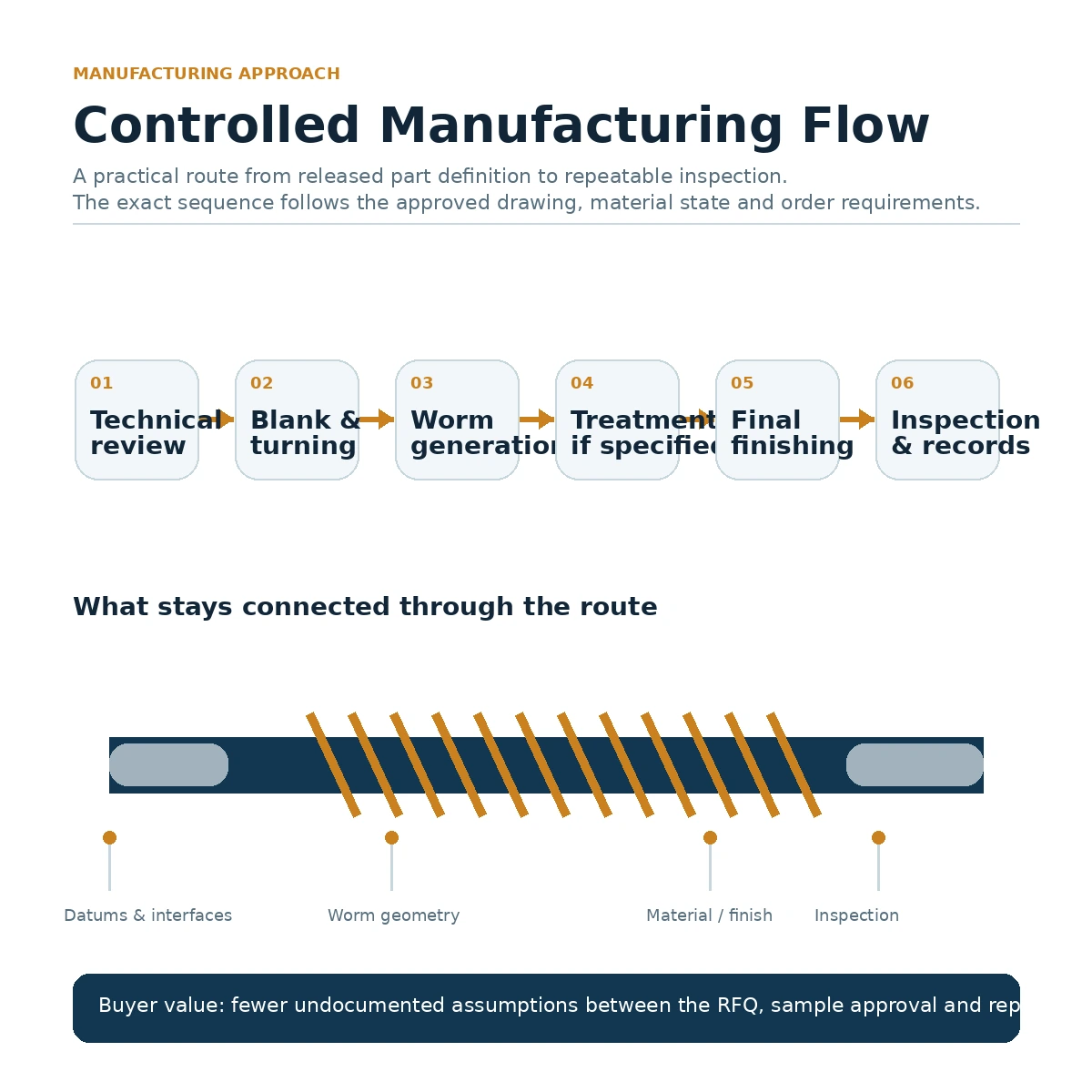
A ground route is not automatically “better,” and a generated route is not automatically “economy.” The useful question is which process can hold the finished geometry, surface, material condition and inspection scope required by the part at the intended quantity.
Use the table as a process-selection check after the finished requirement is known. It keeps heat treatment, final geometry, inspection and volume tied to the manufacturing route instead of turning process names into quality labels.
Verificación de funcionamiento
| Situación | Qué verificar |
|---|---|
| Before heat treatment | Confirm which geometry can be left for later finishing. |
| After heat treatment | Account for distortion and which surfaces need final correction. |
| Inspection | State the profile/lead or dimensional characteristics that are actually controlled. |
| Quantity | Prototype and repeat quantities may justify different process planning while preserving the same released geometry. |
Cita de las interfaces reales
Solicitar presupuesto / Enviar solicitud de cotización
Envíe la referencia del modelo o plano, la cantidad, la aplicación y la geometría que controla el ajuste y la malla. Los valores desconocidos se pueden identificar para su confirmación en lugar de adivinarlos.