Technical buyer guide
Ground vs Hobbed Worm Shafts: Process and Selection
Grinding and hobbing are manufacturing-route decisions. The drawing, material/treatment sequence, finished geometry and production economics decide which route belongs on the part.
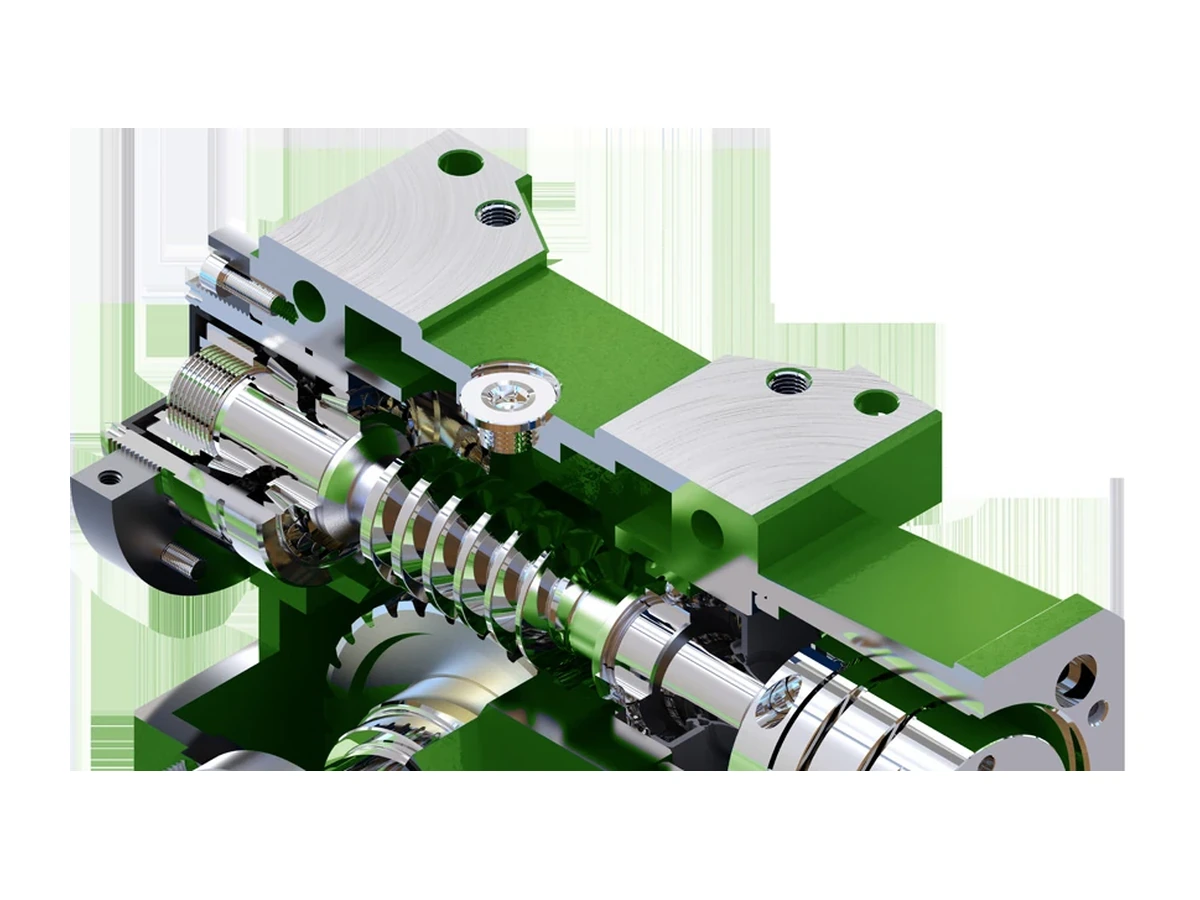
Why this question matters
For a buyer, ground and hobbed worm shafts matters because it changes the information that belongs on the drawing, inspection plan or RFQ. The checks below turn the topic into purchasing decisions instead of leaving it as background theory.
Decision point
Hobbing / generating route
A generated tooth surface can be appropriate for many worm shafts when the specified geometry and finished requirement are compatible with the process.
Decision point
Grinding route
Thread grinding is considered when the ordered tooth geometry, post-treatment condition or finish requirement calls for a ground final surface. It is not automatically required for every precision-sounding application.
RFQ note
If the drawing controls the process, say so. If it controls only the functional result, provide the required geometry/quality so the route can be reviewed instead of chosen from a website label.
RFQ fields to carry forward
| Parameter | Specification / guidance |
|---|---|
| Part reference | Drawing/sample/model and revision. |
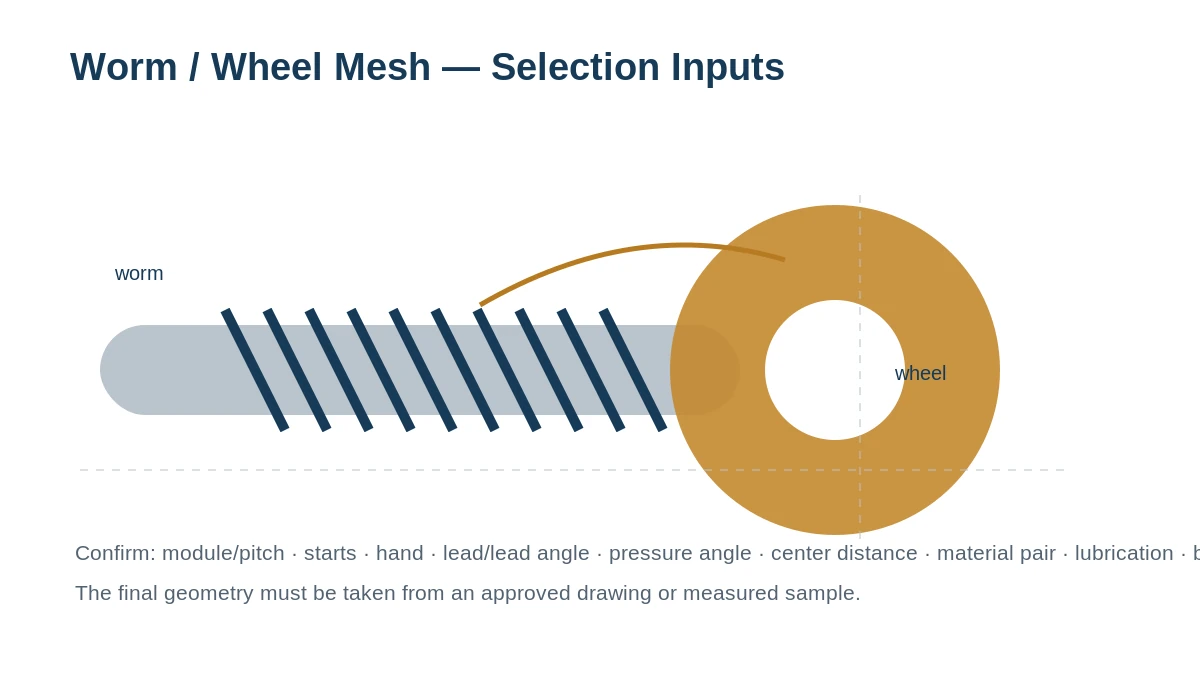
| Worm geometry | Module/pitch, starts, hand, lead/lead angle, pressure angle when known. |
| Mating wheel | Tooth count/material/center distance or complete assembly reference. |
| Interfaces | Journals, shoulders and end features. |
| Duty | Speed, load, duty, lubrication, environment. |
| Order | Quantity, inspection/documents, target date and destination. |
Frequently asked questions
Can I leave unknown values blank?
Yes. Mark them as unknown and attach the part/wheel or application context. A blank item is safer than a guessed technical value.
Does the website product table replace my drawing?
No. Product tables organize confirmed series context and RFQ requirements. The approved drawing or order specification controls custom geometry.
Can I order samples first?
For a ground and hobbed worm shafts project, 1–5 samples can be considered where the manufacturing route is suitable. A very small 1–2 piece order is also possible, normally at a higher unit cost.
Practical check
Manufacturing route should be a result of the requirement
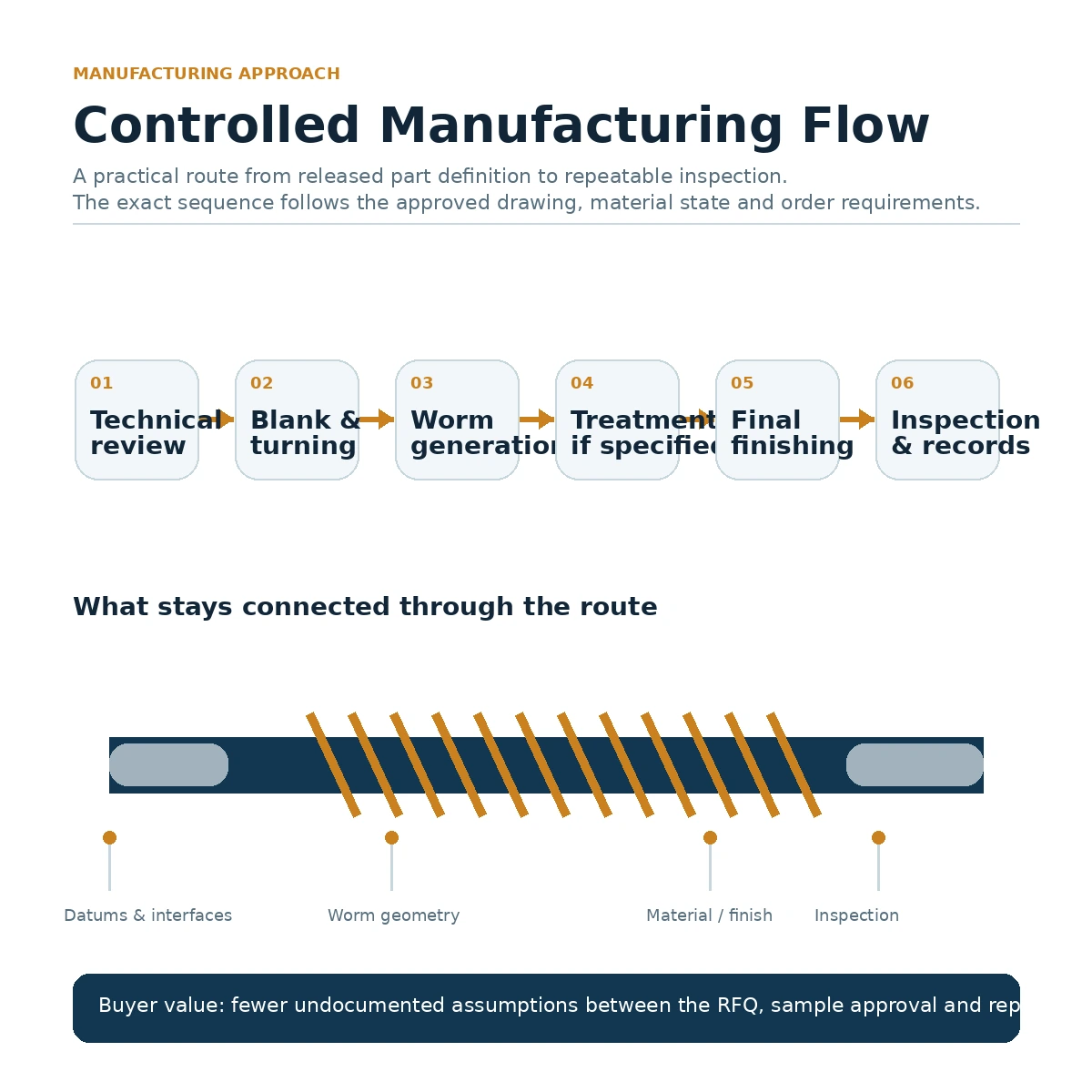
A ground route is not automatically “better,” and a generated route is not automatically “economy.” The useful question is which process can hold the finished geometry, surface, material condition and inspection scope required by the part at the intended quantity.
Use the table as a process-selection check after the finished requirement is known. It keeps heat treatment, final geometry, inspection and volume tied to the manufacturing route instead of turning process names into quality labels.
Working check
| Situation | What to verify |
|---|---|
| Before heat treatment | Confirm which geometry can be left for later finishing. |
| After heat treatment | Account for distortion and which surfaces need final correction. |
| Inspection | State the profile/lead or dimensional characteristics that are actually controlled. |
| Quantity | Prototype and repeat quantities may justify different process planning while preserving the same released geometry. |
Quote from the real interfaces
Request a Quote / Send RFQ
Send the model or drawing reference, quantity, application and the geometry that controls fit and mesh. Unknown values can be identified for confirmation rather than guessed.