Guida tecnica per acquirenti
Alberi a vite senza fine rettificati o fresati: processo e selezione
Grinding and hobbing are manufacturing-route decisions. The drawing, material/treatment sequence, finished geometry and production economics decide which route belongs on the part.
Perché questa domanda è importante
For a buyer, ground and hobbed worm shafts matters because it changes the information that belongs on the drawing, inspection plan or RFQ. The checks below turn the topic into purchasing decisions instead of leaving it as background theory.
Punto decisionale
Hobbing / generating route
A generated tooth surface can be appropriate for many worm shafts when the specified geometry and finished requirement are compatible with the process.
Punto decisionale
Grinding route
Thread grinding is considered when the ordered tooth geometry, post-treatment condition or finish requirement calls for a ground final surface. It is not automatically required for every precision-sounding application.
RFQ note
If the drawing controls the process, say so. If it controls only the functional result, provide the required geometry/quality so the route can be reviewed instead of chosen from a website label.
Campi della richiesta di offerta da riportare
| Parametro | Specifiche/linee guida |
|---|---|
| Riferimento parte | Disegno/campione/modello e revisione. |
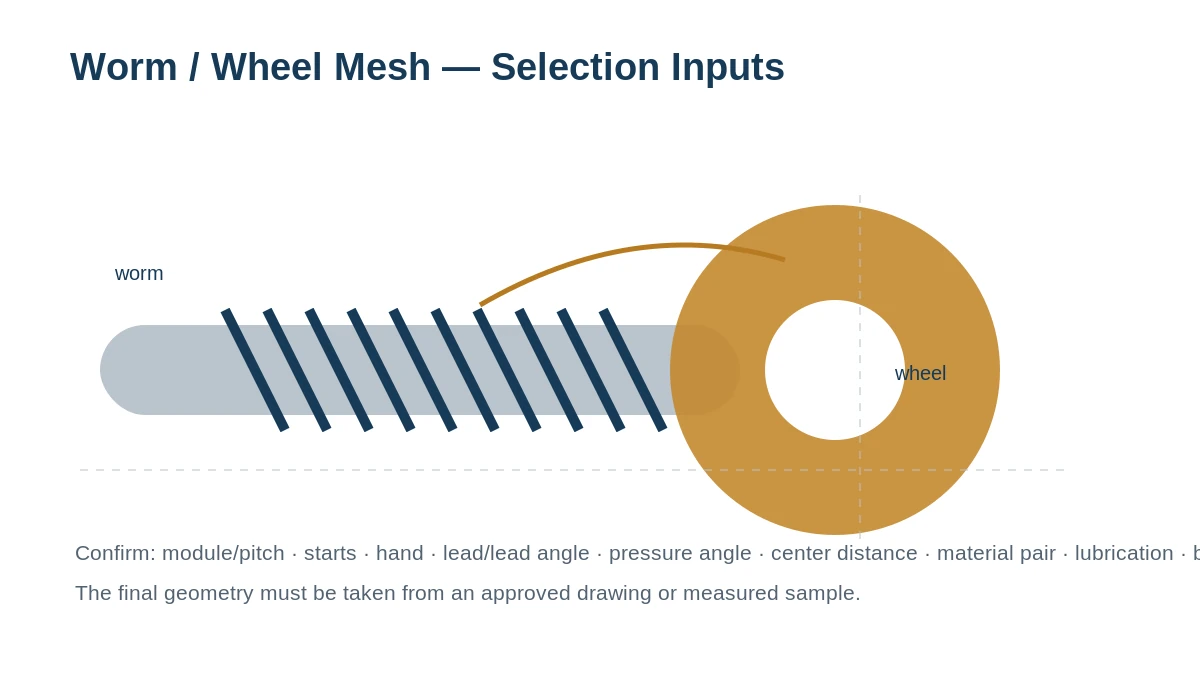
| Geometria del verme | Modulo/passo, partenze, mano, anticipo/angolo di anticipo, angolo di pressione quando noto. |
| Ruota di accoppiamento | Numero di denti/materiale/distanza tra i centri o riferimento completo dell'assemblaggio. |
| Interfacce | Perni, spalle e caratteristiche terminali. |
| Dovere | Velocità, carico, servizio, lubrificazione, ambiente. |
| Ordine | Quantità, ispezione/documentazione, data prevista e destinazione. |
Domande frequenti
Posso lasciare vuoti i valori sconosciuti?
Sì. Contrassegnali come sconosciuti e allega il codice del componente/ruota o il contesto dell'applicazione. Un campo vuoto è più sicuro di un valore tecnico ipotizzato.
La tabella dei prodotti del sito web sostituisce il mio disegno?
No. Le tabelle dei prodotti organizzano il contesto delle serie confermate e i requisiti della richiesta di offerta. Il disegno approvato o la specifica dell'ordine regolano la geometria personalizzata.
Posso ordinare prima dei campioni?
For a ground and hobbed worm shafts project, 1–5 samples can be considered where the manufacturing route is suitable. A very small 1–2 piece order is also possible, normally at a higher unit cost.
Verifica pratica
Manufacturing route should be a result of the requirement
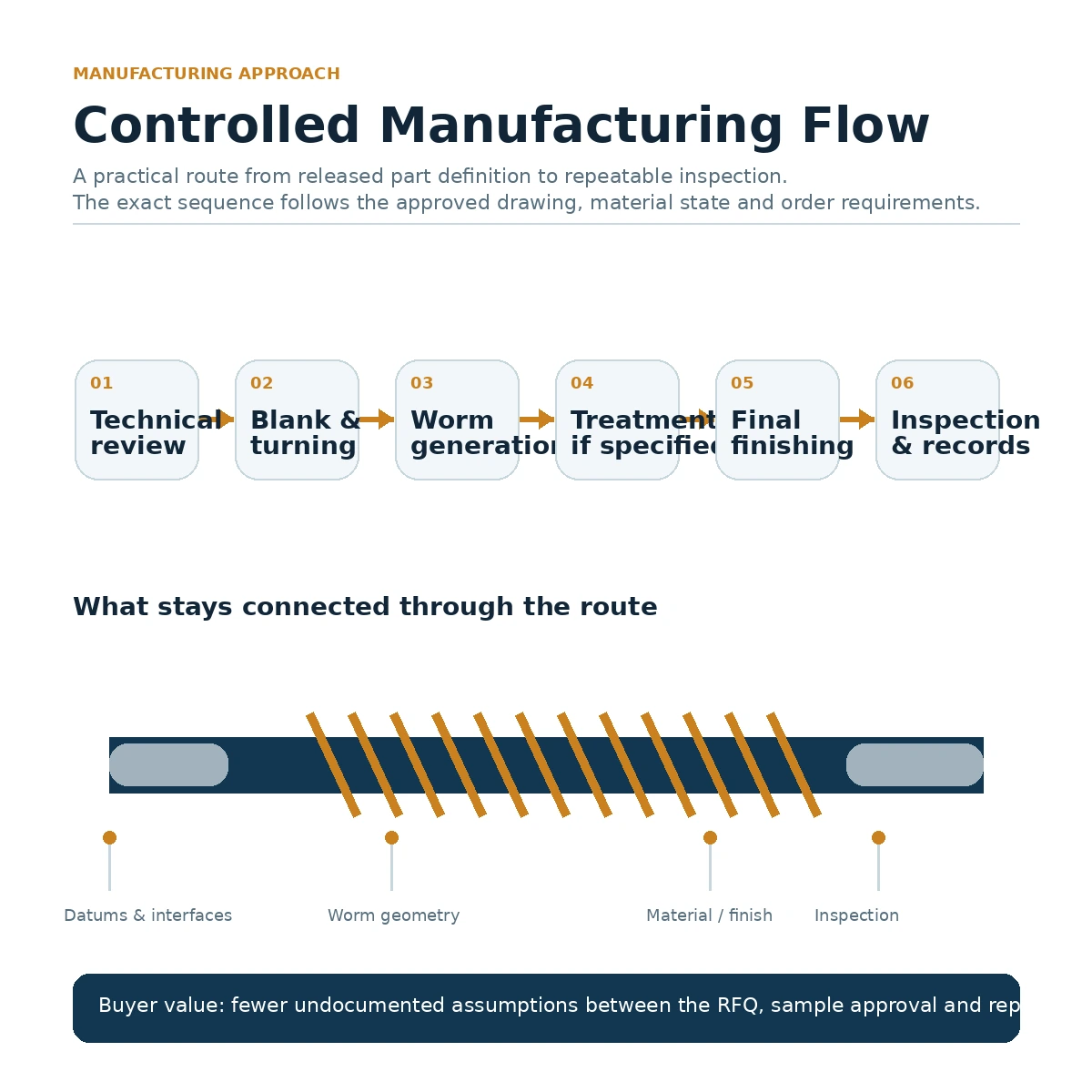
A ground route is not automatically “better,” and a generated route is not automatically “economy.” The useful question is which process can hold the finished geometry, surface, material condition and inspection scope required by the part at the intended quantity.
Use the table as a process-selection check after the finished requirement is known. It keeps heat treatment, final geometry, inspection and volume tied to the manufacturing route instead of turning process names into quality labels.
Controllo di funzionamento
| Situazione | Cosa verificare |
|---|---|
| Before heat treatment | Confirm which geometry can be left for later finishing. |
| After heat treatment | Account for distortion and which surfaces need final correction. |
| Inspection | State the profile/lead or dimensional characteristics that are actually controlled. |
| Quantity | Prototype and repeat quantities may justify different process planning while preserving the same released geometry. |
Citazione dalle interfacce reali
Richiedi un preventivo / Invia una richiesta di offerta
Invia il modello o il riferimento del disegno, la quantità, l'applicazione e la geometria che controlla l'adattamento e la mesh. I valori sconosciuti possono essere identificati per la conferma anziché essere stimati.