Technical buyer guide
How Dual-Lead Worm Shafts Support Backlash Adjustment
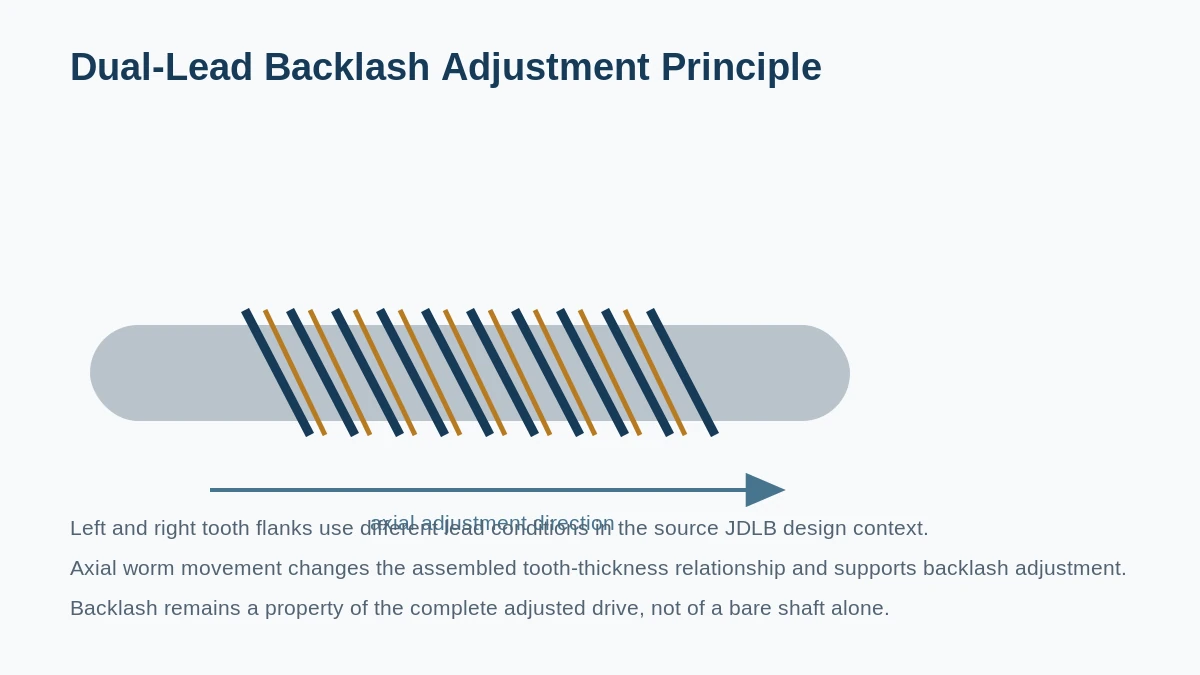
A dual-lead worm uses different lead conditions on its two flanks so axial position changes the tooth-thickness relationship in the mesh. The mechanism gives an assembly a way to adjust backlash without changing center distance.
Why this question matters
For a buyer, dual-lead worm shafts and backlash adjustment matters because it changes the information that belongs on the drawing, inspection plan or RFQ. The checks below turn the topic into purchasing decisions instead of leaving it as background theory.
Decision point
What the adjustment actually changes
The worm is moved axially. Because the two flanks do not progress identically, the effective tooth-thickness relationship at the mesh changes. The wheel, bearings and housing remain part of the result.
Decision point
JDLB context
The EVER POWER JDLB family uses a dual-lead worm concept across sizes 45, 50, 55, 63, 75 and 90. Drive-level backlash grades differ by size/configuration and belong to the complete adjusted unit.
Service implication
A replacement dual-lead worm must preserve the designed relationship with the wheel and the adjustment arrangement. Quoting only an outside diameter cannot protect that behavior.
RFQ fields to carry forward
| Parameter | Specification / guidance |
|---|---|
| Part reference | Drawing/sample/model and revision. |
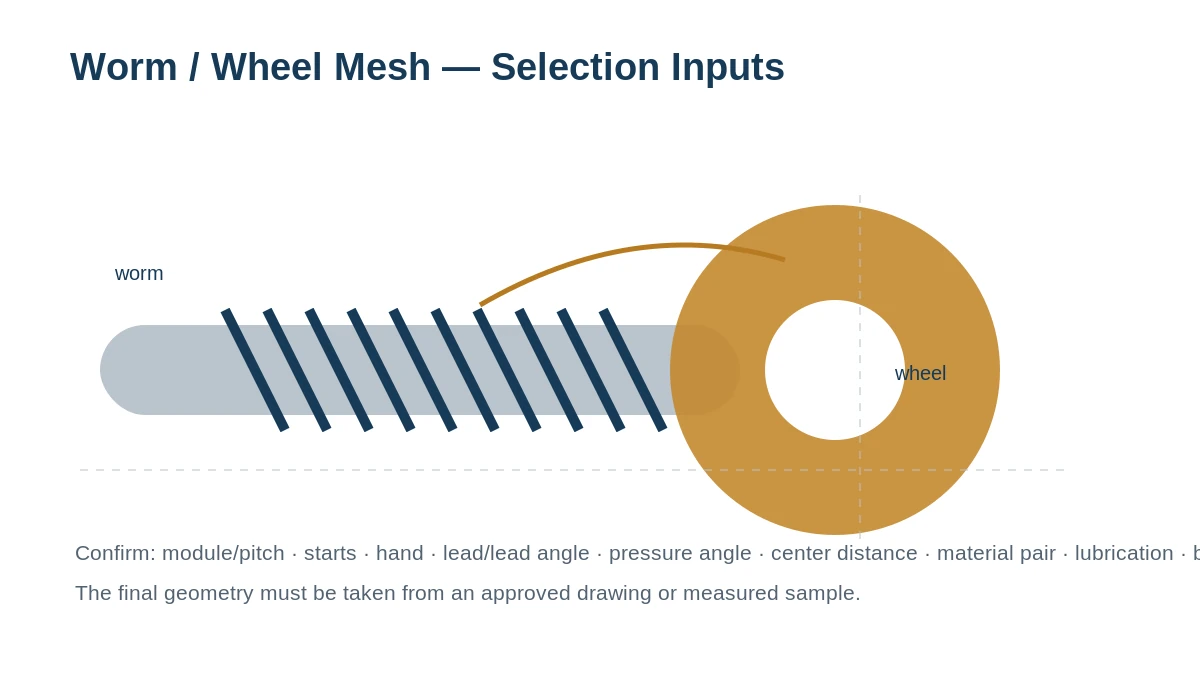
| Worm geometry | Module/pitch, starts, hand, lead/lead angle, pressure angle when known. |
| Mating wheel | Tooth count/material/center distance or complete assembly reference. |
| Interfaces | Journals, shoulders and end features. |
| Duty | Speed, load, duty, lubrication, environment. |
| Order | Quantity, inspection/documents, target date and destination. |
Frequently asked questions
Can I leave unknown values blank?
Yes. Mark them as unknown and attach the part/wheel or application context. A blank item is safer than a guessed technical value.
Does the website product table replace my drawing?
No. Product tables organize confirmed series context and RFQ requirements. The approved drawing or order specification controls custom geometry.
Can I order samples first?
For a dual-lead worm shafts and backlash adjustment project, 1–5 samples can be considered where the manufacturing route is suitable. A very small 1–2 piece order is also possible, normally at a higher unit cost.
Practical check
Adjustment travel must stay connected to the real assembly
Axial movement of a dual-lead worm changes the effective mesh condition, but useful adjustment depends on the wheel, bearings, center distance and the mechanism that locates the shaft. Service instructions should therefore record the reference position and the condition of the complete drive.
Use these assembly checks before moving the adjustment or ordering a replacement. They help distinguish normal dual-lead adjustment from lost motion caused by bearings, wheel wear or an incorrect installation reference.
Working check
| Situation | What to verify |
|---|---|
| Before adjustment | Check bearings, wheel wear, lubrication and current contact. |
| During adjustment | Use the drive maker or controlled assembly method; do not treat axial movement as an unlimited backlash correction. |
| After adjustment | Verify the assembled motion/contact condition under the relevant operating direction. |
| Replacement shaft | Match the drive size/ratio and exact interfaces before relying on series-level adjustment data. |
Quote from the real interfaces
Request a Quote / Send RFQ
Send the model or drawing reference, quantity, application and the geometry that controls fit and mesh. Unknown values can be identified for confirmation rather than guessed.