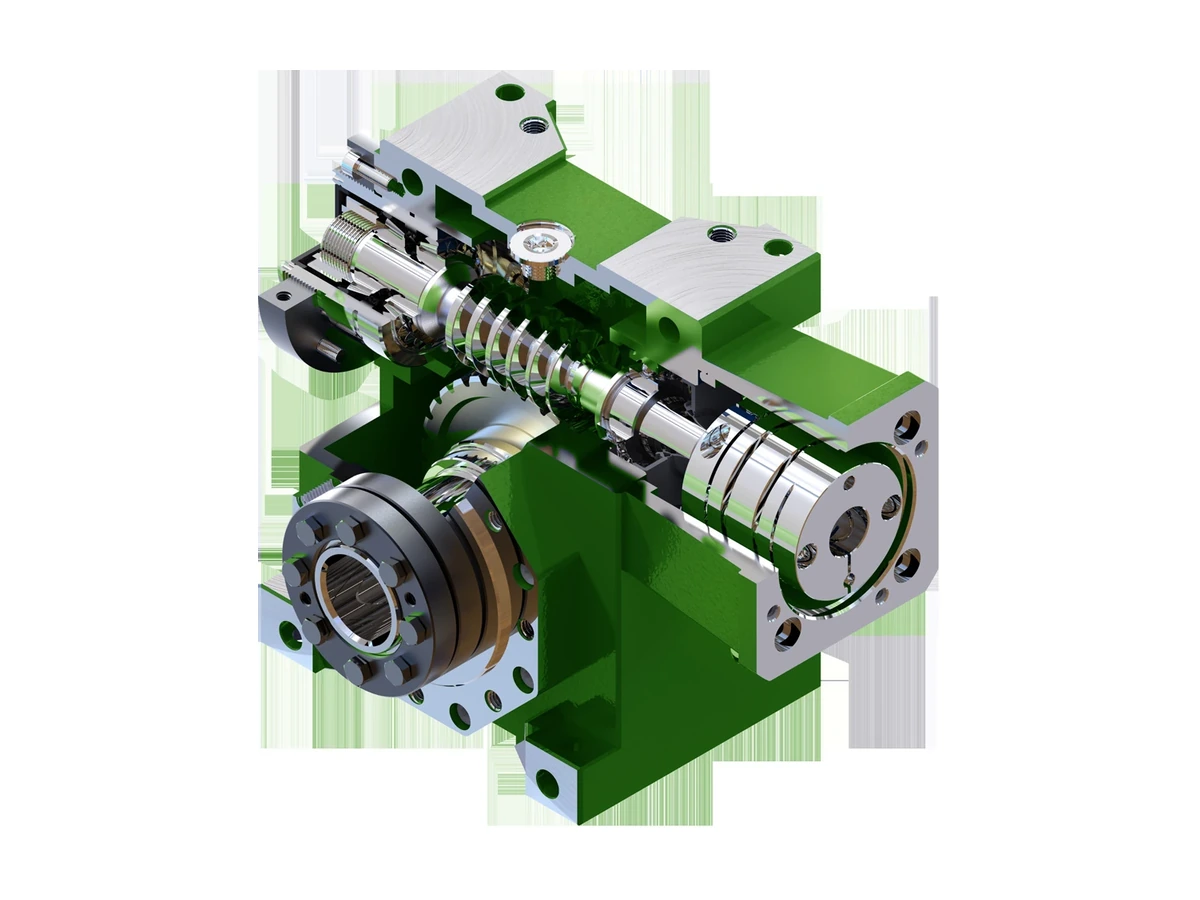
Description
Product definition
Define this product before manufacturing
Stainless selection begins with the required grade or corrosion environment, then checks shaft strength, tooth wear, machinability, possible hardening/finishing and compatibility with the wheel material and lubricant.
For custom stainless steel worm shaft, the RFQ should connect tooth geometry to bearing journals, shoulders and the input/output interface. Unknown values can be marked for technical review rather than replaced with generic website dimensions.
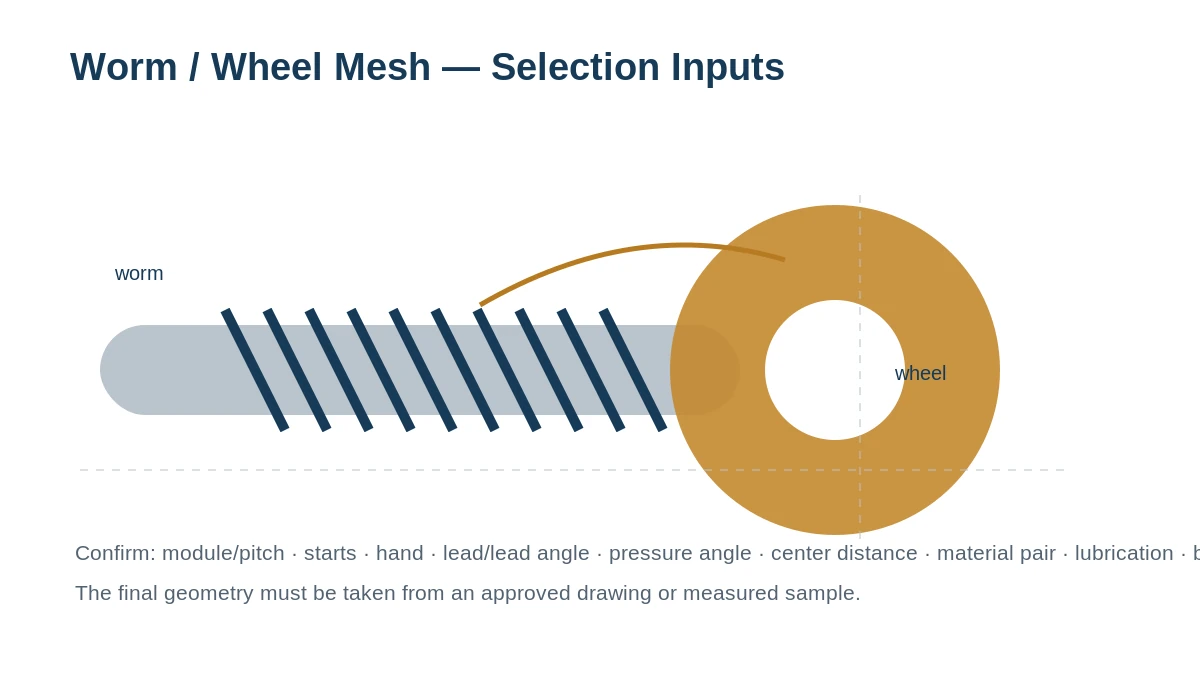
Technical specification table
| Parameter | Specification / guidance |
|---|---|
| Module / diametral pitch | Drawing / RFQ required |
| Starts | Drawing / RFQ required |
| Hand | Right / left as specified |
| Pressure angle / profile | Drawing / RFQ required |
| Lead / lead angle | Drawing / RFQ required |
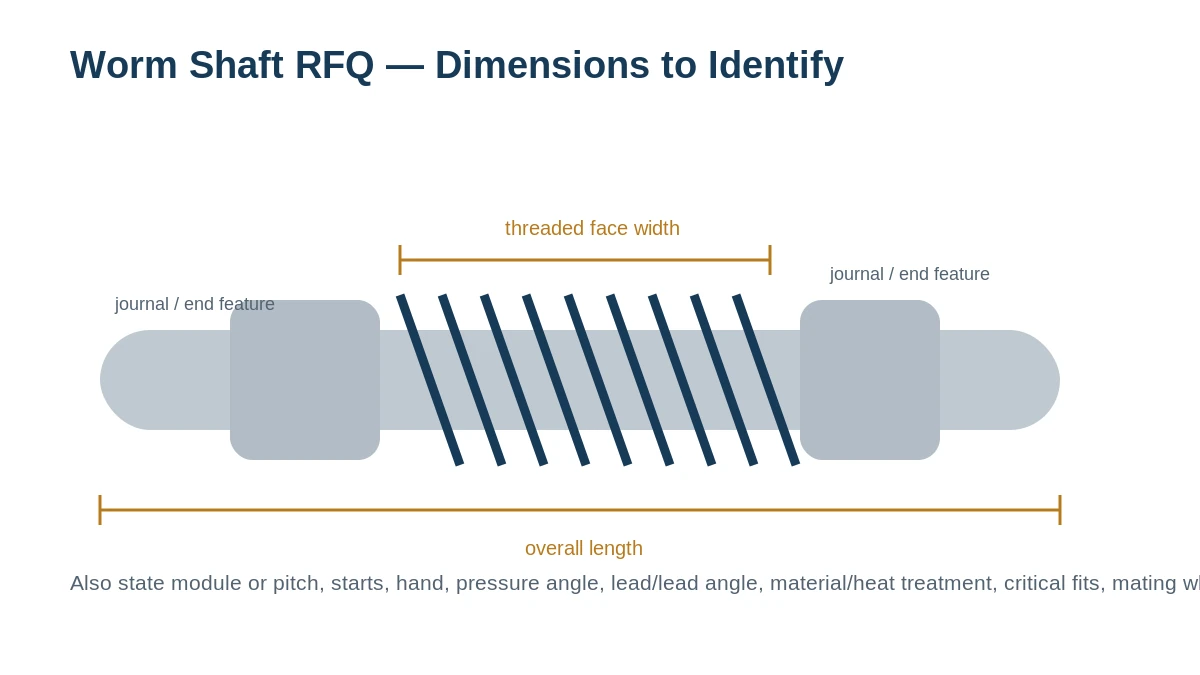
| Threaded face width | Drawing / RFQ required |
| Overall length | Drawing / RFQ required |
| Bearing journals / fits | Drawing / RFQ required |
| End features | Keyway / spline / thread / bore / flat / other as specified |
| Material | Buyer specification or application-reviewed selection |
| Heat treatment / hardness | Per approved specification; not assumed |
| Surface / finish requirement | Per drawing and selected manufacturing route |
| Mating worm wheel | Supply tooth count, material, center distance / drawing where available |
| Quantity | Prototype, 1–5 sample where suitable, or production quantity |
| Inspection / documents | Define required report/material/treatment/gear checks in RFQ |
RFQ geometry for Custom Stainless Steel Worm Shaft
For custom stainless steel worm shaft, put the worm thread and shaft interfaces on the same controlled sketch or drawing. Concentricity, shoulder locations and end features can influence how the part sits in the bearings and therefore how the mesh behaves.
Where this configuration is considered
Typical enquiries include washdown equipment, humid or corrosive service and specialty machinery where the ordered specification requires stainless construction. The application sets the duty and documentation context, while the approved drawing or project specification sets the actual part geometry.
Order path for Custom Stainless Steel Worm Shaft
Send part definition
Provide the drawing/sample, mating-wheel context, quantity and application.
Close technical gaps
Review the unknown items that are specific to custom stainless steel worm shaft before the quotation is finalized.
Confirm commercial scope
Agree quantity, delivery basis and required documents.
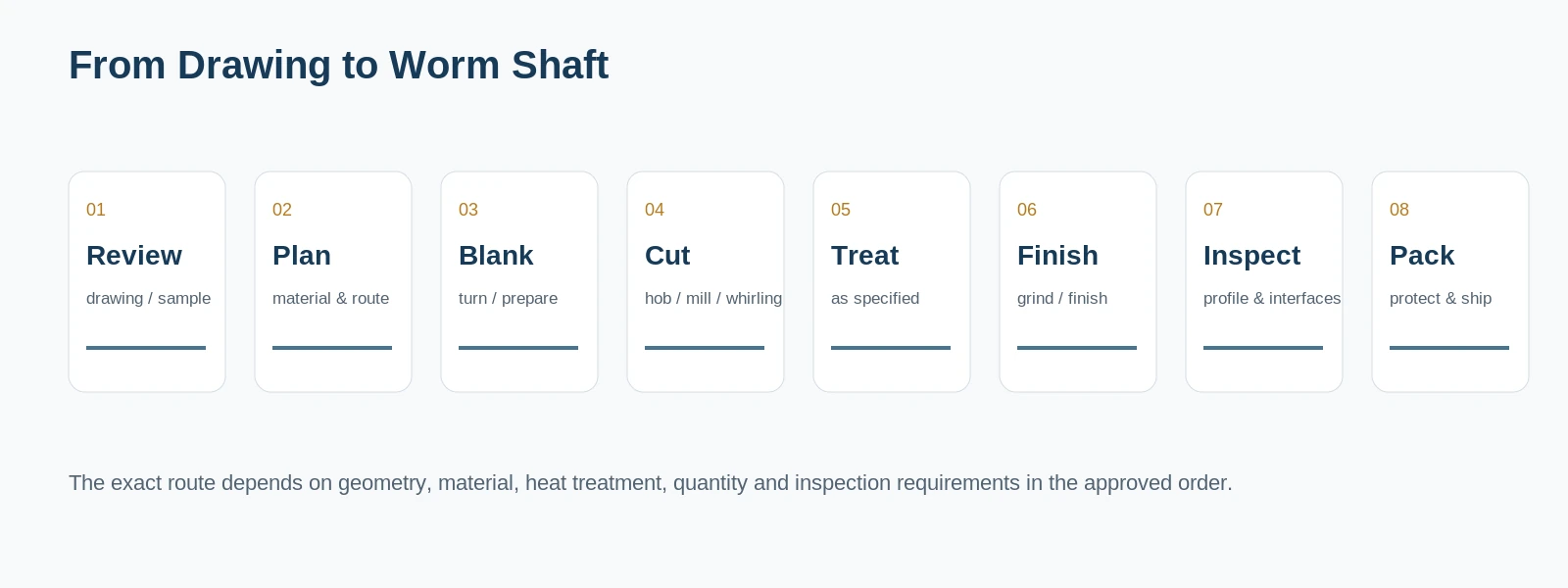
Manufacture
Run the approved material/process route for the controlled part definition.
Inspect and release
Check the characteristics defined by the order before packing and shipment.
Frequently asked questions
Can custom stainless steel worm shaft be reverse-engineered from a worn sample?
A corroded sample can be measured, but pitting and material loss should be separated from original dimensions and the stainless grade should be verified rather than guessed.
How should the manufacturing route be specified for custom stainless steel worm shaft?
If a stainless grade is mandatory, state the exact designation and any hardness/passivation/finish requirement; “stainless” alone is not a complete material specification.
Should the mating worm wheel be included with a custom stainless steel worm shaft RFQ?
Include the wheel drawing or sample when ratio, contact, wear or backlash is uncertain. For custom stainless steel worm shaft, the mating member is often the fastest way to prevent an incorrect tooth interpretation.
Configuration detail
Specify the stainless grade for a reason, not as a generic upgrade
Corrosion resistance can be important, but stainless selection also changes strength, hardness, wear and manufacturing considerations. The wheel material and lubrication remain part of the pair-level review, especially where galling or adhesive wear is a concern.
A stainless enquiry should close the exact grade or the service requirement that the grade must satisfy, together with wheel material, lubrication and any required treatment. “Stainless” on a product page is not a complete material specification.
Points to close before manufacturing release
| Control point | What to define |
|---|---|
| Environment | Moisture, washdown, chemicals or product-contact surroundings. |
| Exact grade | State designation or let the requirement remain open for application review. |
| Treatment / hardness | Specify if required; do not assume all stainless parts share one condition. |
| Mating material | Record worm-wheel material and lubrication compatibility. |
From dimensional definition to controlled production
With grade, geometry and mating conditions approved, manufacturing and inspection can be planned around the actual material behavior. Customer-controlled corrosion, surface or documentation requirements should be referenced by revision rather than assumed from the material family name.
Quote from the real interfaces
Request a Quote / Send RFQ
Send the model or drawing reference, quantity, application and the geometry that controls fit and mesh. Unknown values can be identified for confirmation rather than guessed.