Technical buyer guide
Material and Heat-Treatment Questions for Worm Shafts
The material question is not “steel or stainless?” It is whether the selected material and treatment satisfy shaft strength, tooth wear, corrosion, machinability, distortion and the mating-wheel/lubrication system.
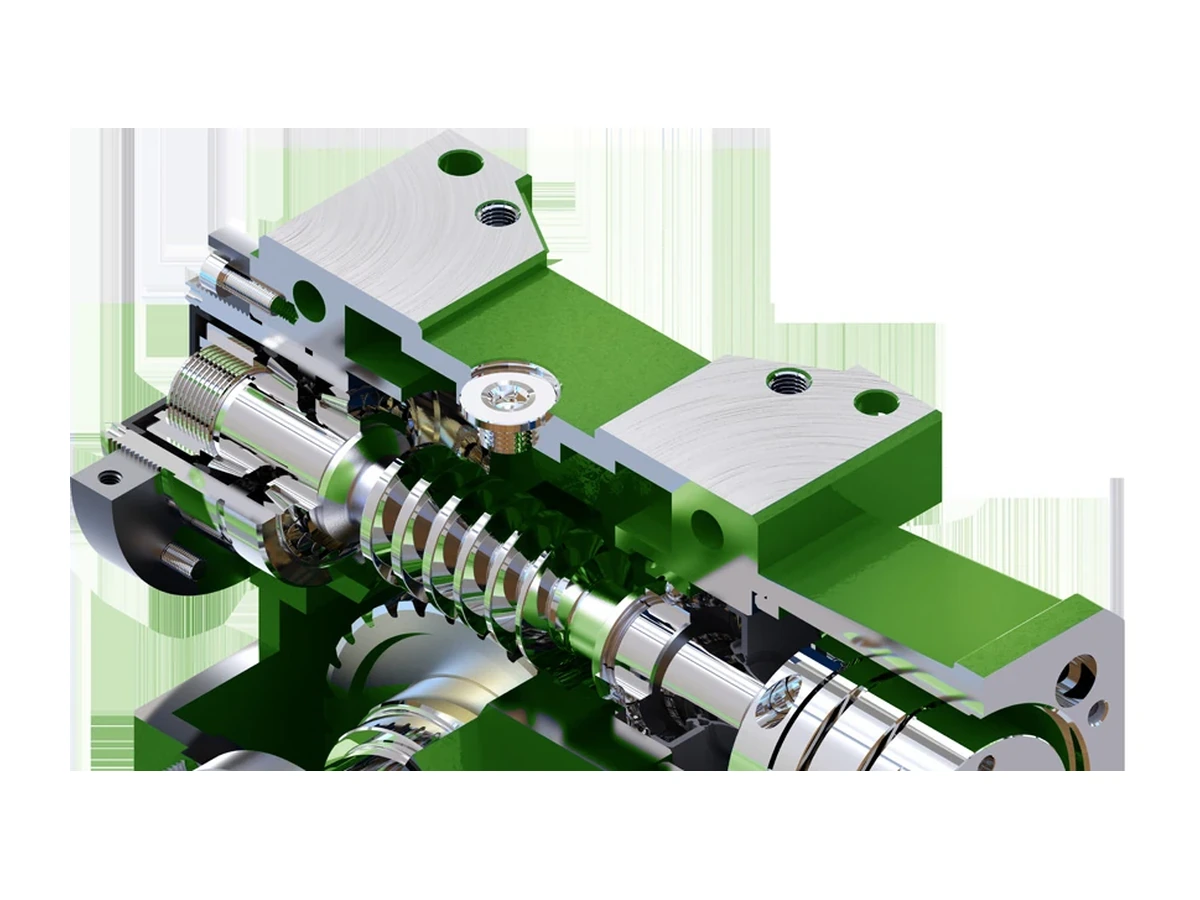
Why this question matters
For a buyer, worm shaft material and heat treatment matters because it changes the information that belongs on the drawing, inspection plan or RFQ. The checks below turn the topic into purchasing decisions instead of leaving it as background theory.
Decision point
Core versus surface requirements
A worm shaft may need a tough core, a wear-resistant surface or both. State the design requirement rather than assuming a hardness from another product family.
Decision point
Treatment sequence
Heat treatment can change dimensions and distortion. When tight tooth or journal geometry is required after treatment, the route may need finishing operations that are planned from the start.
Corrosion trade-off
Stainless can be useful in corrosive environments, but grade, strength, wear and treatment options still need to be matched to the load and wheel material.
RFQ fields to carry forward
| Parameter | Specification / guidance |
|---|---|
| Part reference | Drawing/sample/model and revision. |
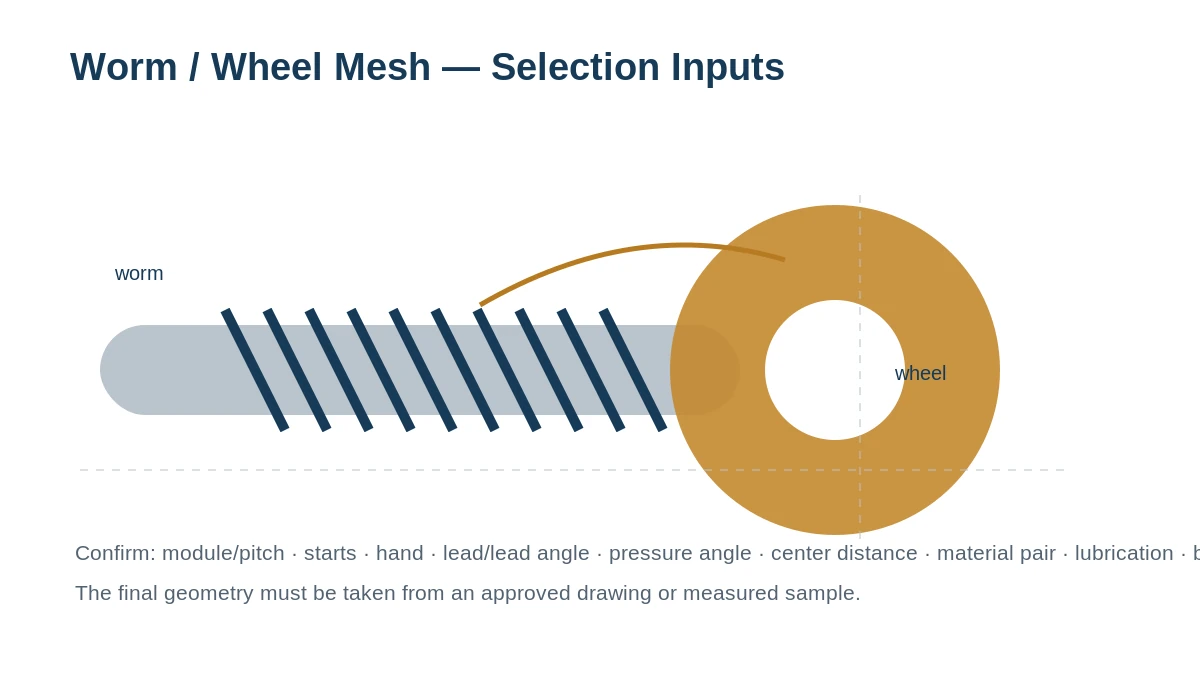
| Worm geometry | Module/pitch, starts, hand, lead/lead angle, pressure angle when known. |
| Mating wheel | Tooth count/material/center distance or complete assembly reference. |
| Interfaces | Journals, shoulders and end features. |
| Duty | Speed, load, duty, lubrication, environment. |
| Order | Quantity, inspection/documents, target date and destination. |
Frequently asked questions
Can I leave unknown values blank?
Yes. Mark them as unknown and attach the part/wheel or application context. A blank item is safer than a guessed technical value.
Does the website product table replace my drawing?
No. Product tables organize confirmed series context and RFQ requirements. The approved drawing or order specification controls custom geometry.
Can I order samples first?
For a worm shaft material and heat treatment project, 1–5 samples can be considered where the manufacturing route is suitable. A very small 1–2 piece order is also possible, normally at a higher unit cost.
Practical check
Material, hardness and mating wheel should be reviewed together
Changing the shaft steel or treatment without considering the worm wheel can move wear to the other member or change the finishing route. The drawing should state the intended material and treatment, while the RFQ explains the service condition that motivated the choice.
Use these material and treatment checks to connect the requested steel condition with the mating wheel, post-treatment finishing and acceptance record. A grade name alone does not define the finished component.
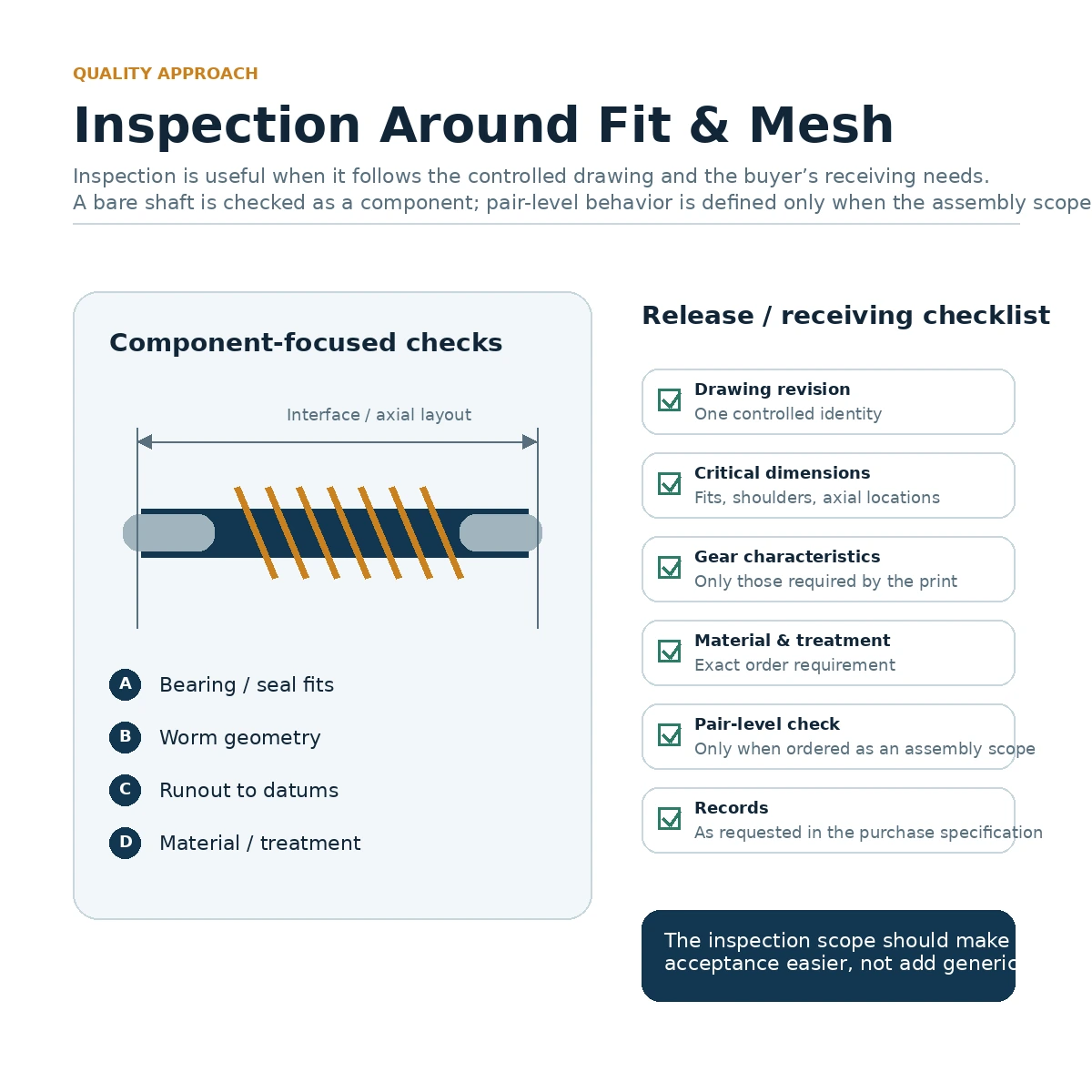
Working check
| Situation | What to verify |
|---|---|
| Core requirement | Strength/toughness needs from the shaft duty. |
| Surface requirement | Wear/hardness condition called out by the design. |
| Distortion risk | What must be finish-machined or ground after treatment. |
| Mating pair | Wheel material, lubrication and any known wear history. |
Quote from the real interfaces
Request a Quote / Send RFQ
Send the model or drawing reference, quantity, application and the geometry that controls fit and mesh. Unknown values can be identified for confirmation rather than guessed.