Buyer guide
Worm Shaft vs Worm Gear Shaft: What Buyers Should Specify
The terms overlap in everyday sourcing, but the useful RFQ is not decided by wording. It is decided by whether the threaded worm is integral with a shaft, how it is supported and what mating wheel geometry it must match.
Start with the actual component
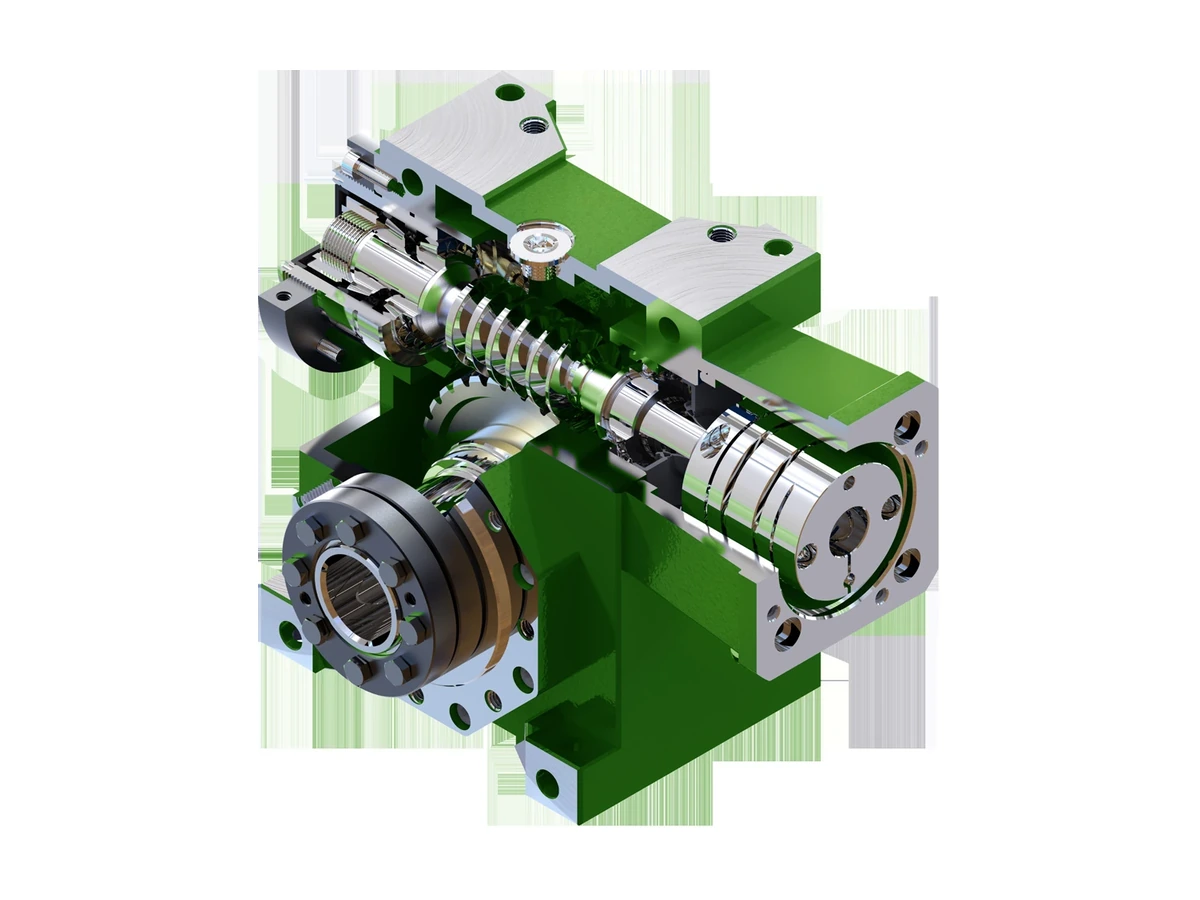
A worm is the screw-like gear member of a worm/wheel mesh. When that threaded geometry is machined as part of a shaft with bearing journals, shoulders and drive-end features, buyers commonly call it a worm shaft or worm gear shaft. Suppliers may use either phrase.
The naming becomes important only when a search result hides the real drawing need. A bare worm, an integral worm shaft, a worm mounted on a separate shaft and a complete worm gearbox are not interchangeable purchase items.
Clarify the part before asking for price
| Parameter | Specification / guidance |
|---|---|
| Threaded member | Is the worm integral with the shaft or a separate gear mounted to one? |
| Support | Which journals, bearings, shoulders and seals locate the part? |
| Drive end | Keyway, spline, thread, coupling seat, bore or other input feature? |
| Mating wheel | Tooth count, material, center distance, ratio and current condition. |
| Geometry | Module/pitch, pressure angle, starts, hand, lead/lead angle and face width. |
| Duty | Speed, torque/load, duty cycle, reversals, lubrication and environment. |
Why the shaft interfaces matter as much as the worm thread
A replacement can mesh correctly and still fail to fit if the bearing seats, shoulder locations or drive-end features are wrong. Conversely, a shaft can drop into the bearings and still produce incorrect contact if the worm lead, start count or profile does not match the wheel.
This is why a complete drawing should keep the tooth data and shaft datums in the same revision-controlled definition. When the shaft also carries other toothed features, procurement teams may be working with suppliers of custom gear shafts; the same principle applies: define the transmitting geometry and the interfaces together instead of sourcing from a name alone.
A worm shaft is both a gear member and a supported shaft
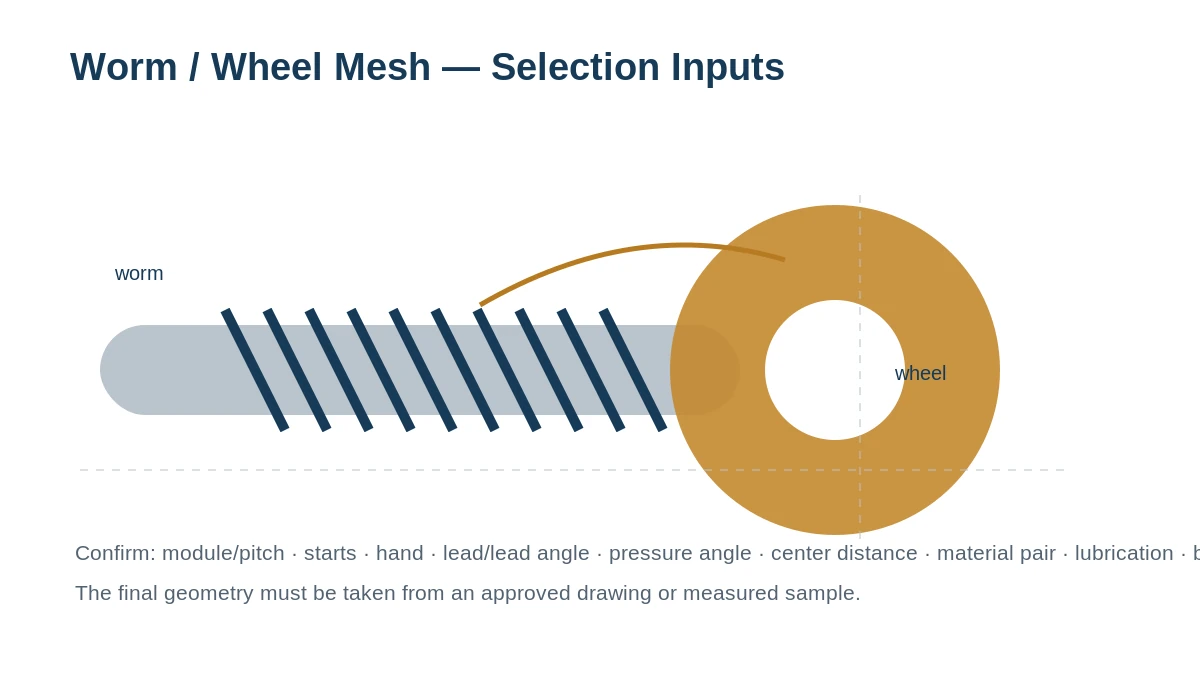
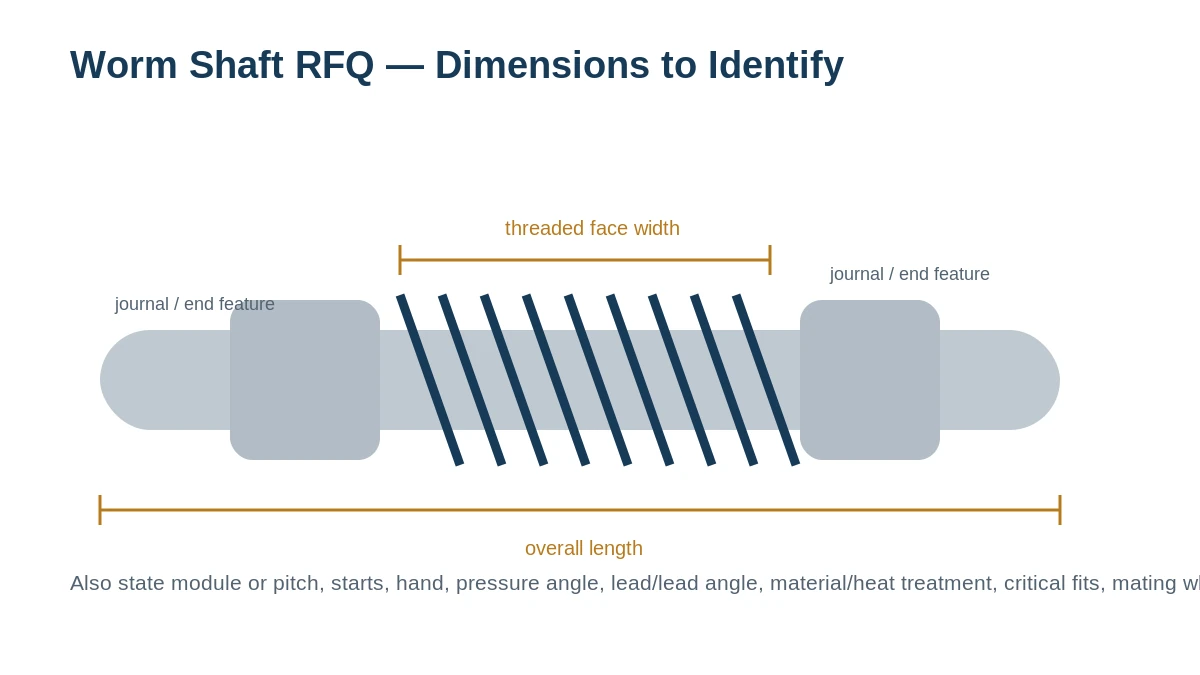
The diagram below is deliberately non-dimensional. It shows the groups of information a drawing must connect: worm geometry in the center, journal/end interfaces around it and the mating wheel that completes the mesh.
When “worm shaft” is the better RFQ term
Use worm shaft when the threaded worm and shaft body are one manufactured component and your drawing includes bearing or drive interfaces. Add “ground,” “hobbed,” “single-start,” “multi-start,” “dual-lead,” “stainless” or a series reference only when those terms are actually part of the controlled requirement.
If you only need the complete gearbox, ask for the gearbox. If you need the wheel and worm together because contact or backlash is the issue, ask for a matched worm shaft and worm wheel set. Clear scope reduces the chance of receiving a quote for the wrong level of assembly.
Frequently asked questions
Are worm shaft and worm gear shaft always different products?
No. Suppliers often use the terms for the same integral worm/shaft component. The drawing and interfaces are more reliable identifiers than the phrase.
Can I quote a worm shaft from the ratio alone?
Usually not. Ratio is only one relationship. You still need the mating wheel, geometry, center distance and shaft interfaces.
Should I send the worm wheel for a replacement?
Yes when the tooth data are unknown, the wheel is worn or contact/backlash is the problem. The pair gives far more evidence than the shaft alone.
Practical check
A simple naming test for purchasing teams
If removing the component also removes the bearing journals or drive-end interface, you are probably buying an integral shaft component rather than only a gear. If the worm is a separate member mounted on another shaft, treat those as separate controlled items.
Before purchasing, use the four naming checks below to connect the commercial description to the physical scope. This prevents a quote for a loose worm, complete worm shaft or gearbox assembly from being treated as the same item.
Working check
| Situation | What to verify |
|---|---|
| Purchase line says “worm” | Confirm whether journals/end features are part of the same item. |
| Purchase line says “worm shaft” | Confirm the mating wheel, ratio and tooth geometry; the name still does not define them. |
| Purchase line says “worm gearbox” | Confirm whether the scope is a complete assembly, spare shaft, wheel or matched pair. |
| Legacy drawing uses another name | Use part number/drawing revision and geometry as the primary identity. |
Quote from the real interfaces
Request a Quote / Send RFQ
Send the model or drawing reference, quantity, application and the geometry that controls fit and mesh. Unknown values can be identified for confirmation rather than guessed.