Market procurement guide
Worm Shaft Supply for Italy Industrial Buyers
The technical specification does not change with geography, but industrial machinery, packaging and motion systems create a mix of OEM and replacement worm-shaft enquiries. This page organizes the RFQ around those practical procurement differences.
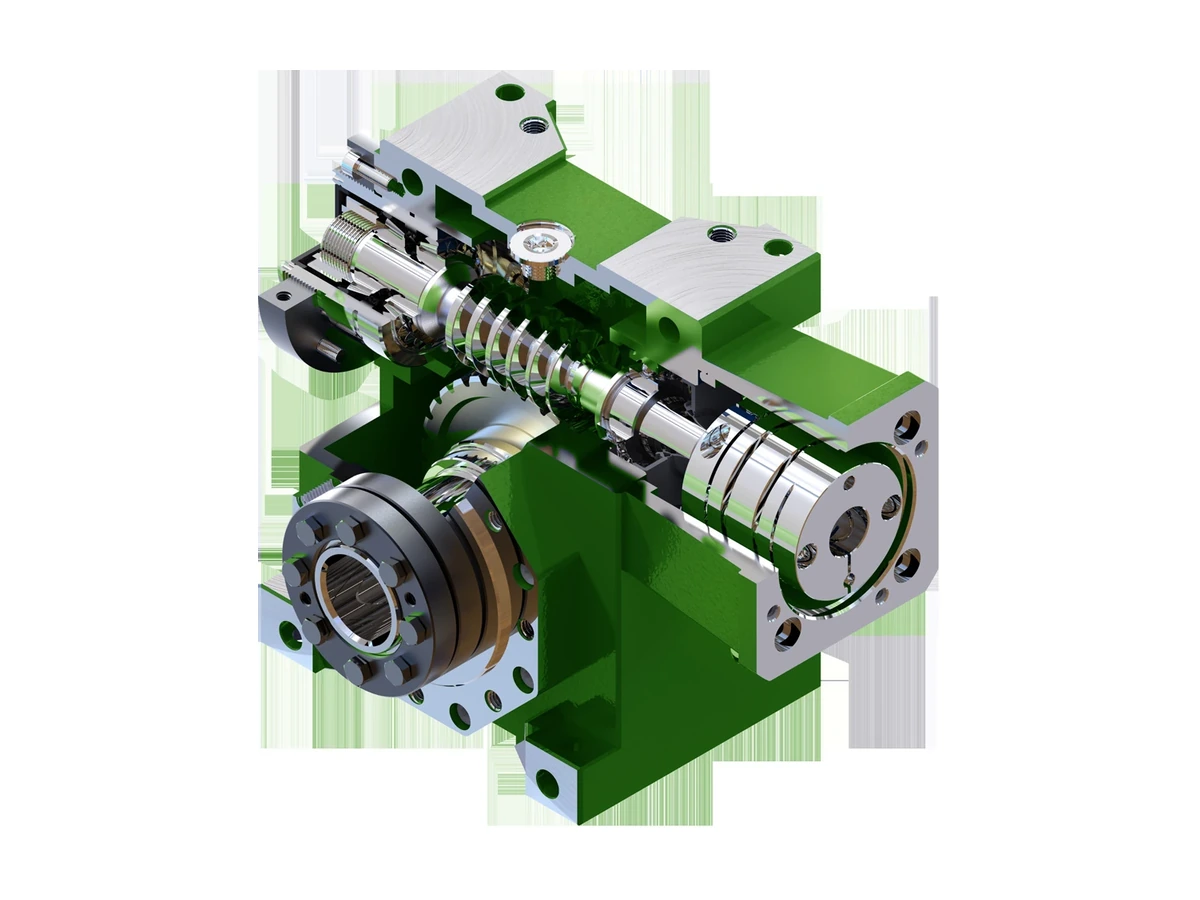
What to include in the RFQ
Include the machine function, drawing or sample, quantity, material/treatment and delivery requirement.
For Italy projects, common application context includes packaging, automation, machine tools, conveying and specialty machinery. The part is still quoted from the actual drawing, sample or mating-wheel requirements; no local stock position is implied.
Procurement checklist
| Parameter | Specification / guidance |
|---|---|
| Part identity | Drawing number/revision, current model or sample reference. |
| Gear geometry | Module/pitch, starts, hand, pressure angle, lead/lead angle and mating-wheel data when known. |
| Interfaces | Journal diameters/fits, shoulders, end threads, bores, keyways or splines. |
| Material / treatment | Use the buyer specification; do not substitute based on a generic market assumption. |
| Inspectie | Define requested dimensional, material, hardness, profile/contact or documentation scope. |
| Commercial | Cif/dap or other terms are selected by destination and order structure. |
Ordering
Export terms are handled after the part is technically defined
For Italy, CIF/DAP or other terms are selected by destination and order structure. The quotation will also state the applicable shipment term, packing scope and delivery basis after the shaft specification and quantity are confirmed.

Procurement detail
Separate the machine function from the manufacturing method
Packaging, automation and specialty machinery may use worm shafts for continuous drive, adjustment, indexing or positioning. State the machine function first, then supply the actual drawing or sample so hobbing, grinding, material and inspection are selected from the part requirement rather than from the industry name.
For replacement work, include downtime or spare-planning needs with the quantity. For new equipment, identify prototype versus repeat-production quantities so the process and commercial quote reflect the real program.
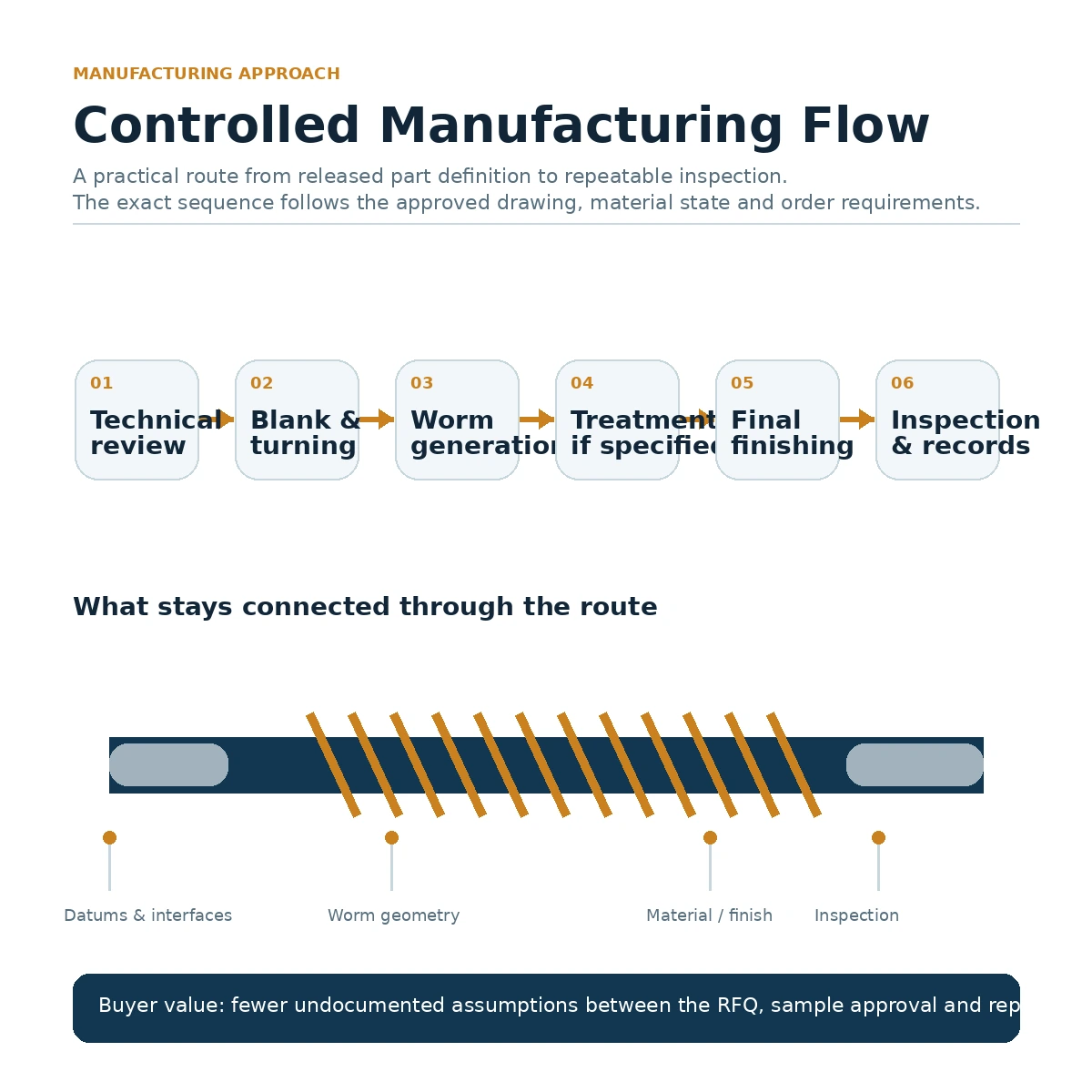
A clearer export RFQ usually separates these four decisions
| Decision | What belongs there |
|---|---|
| Technical identity | Drawing/sample, worm geometry, mating wheel and shaft interfaces. |
| Manufacturing scope | Material, treatment, finishing route and any special process called out by the order. |
| Verification scope | Critical dimensions/gear characteristics and the documentation required with the shipment. |
| Commercial scope | Quantity, sample/repeat status, destination, requested shipment term, packing and target timing. |
Local availability is confirmed per order
Italian OEM and MRO requests are handled from the EVER POWER contact listed here. There is no claim of an Italian warehouse or local manufacturing facility, and delivery scope is established in the quotation.
For planned spares, state the required site/postcode and whether parts can ship with other models. For emergency replacement, identify the shutdown constraint so timing can be assessed together with technical feasibility.
Citaat uit de echte interfaces
Offerte aanvragen / Offerteaanvraag versturen
Stuur het model of de tekeningreferentie, de hoeveelheid, de toepassing en de geometrie die de pasvorm en de maaswijdte bepaalt. Onbekende waarden kunnen worden geïdentificeerd ter bevestiging in plaats van te worden gegokt.